
Bolt-on or strap-on climbing holds for kids, and why it is not a preference
Two mounting systems for the same rock climbing holds, and two different surfaces. Buying the wrong one is the most common mistake in a first order of kids climbing holds, and it is not recoverable with an adapter.
The short answers
- Can I screw a bolt-on hold straight into a tree? No. Lag screws into living wood injure the tree and loosen as it moves. Use a strap kit on a trunk, every time.
- Do strap-on holds work on a flat wall? Not usefully — there is nothing for the strap to wrap. Buy the bolt-on version for plywood.
- Which is safer for small children? Neither, inherently. Safety comes from the build: correct hardware or correct tension, matting underneath, and an adult watching the first climbs.
The bolt-on system
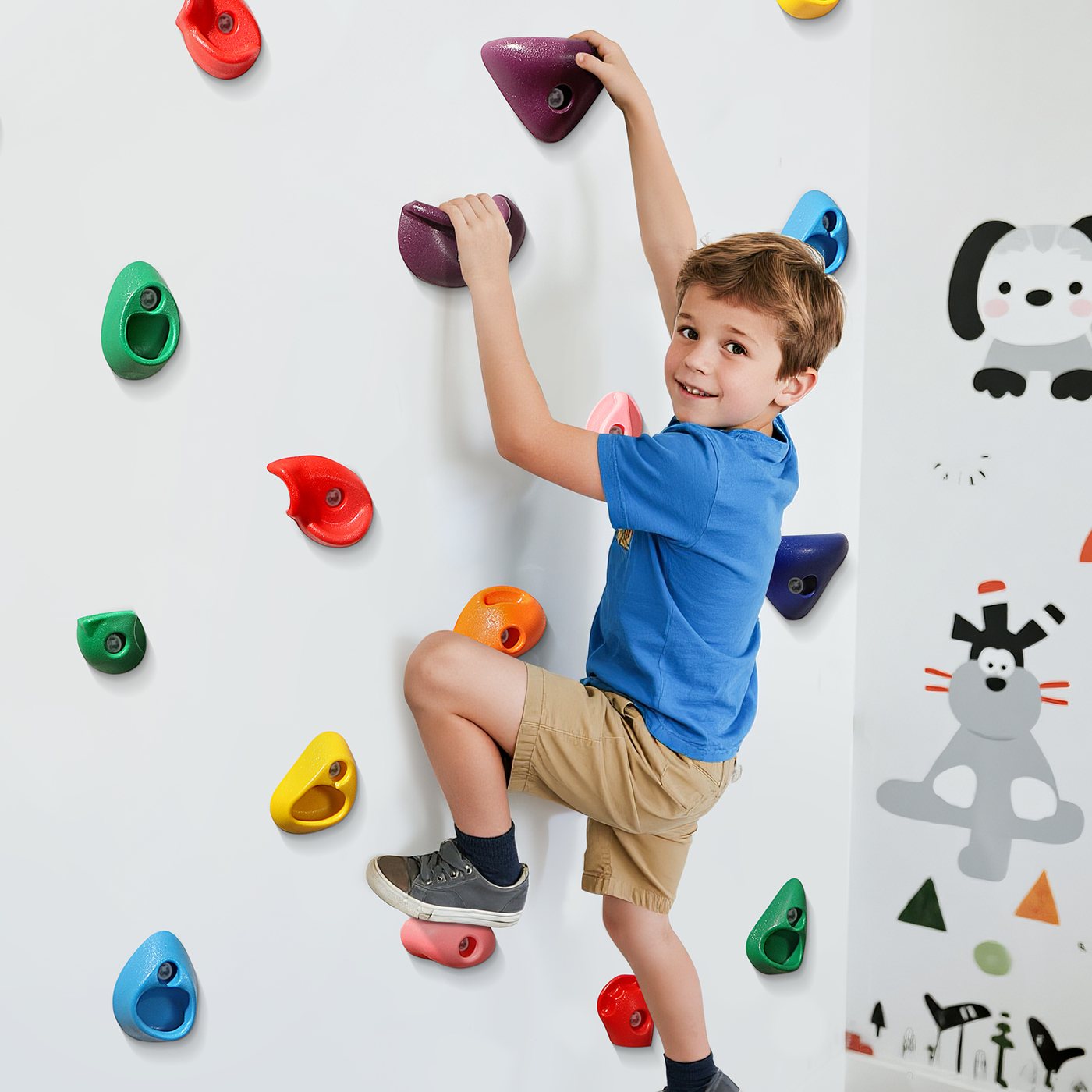
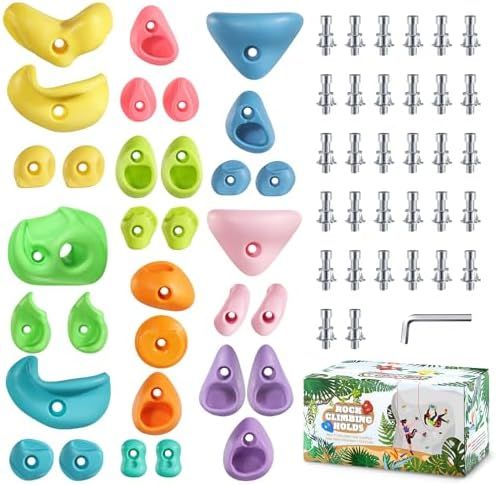
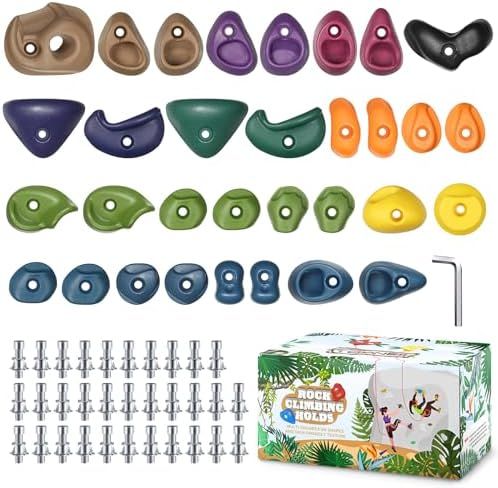
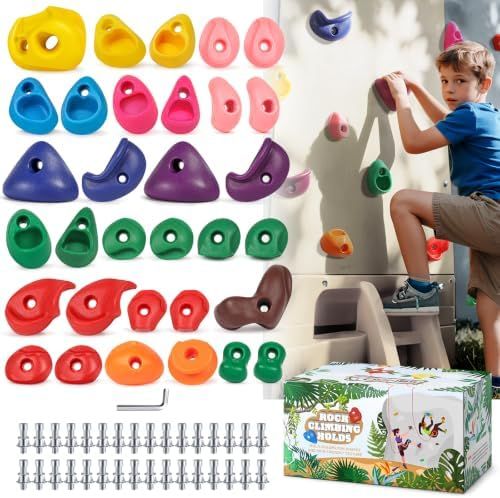
A bolt-on hold has a bore through the middle. You drill the panel, set a weld nut in the back face, and run a two inch bolt through the grip into the nut. The hold ends up clamped flat to the plywood and does not rotate under load, which is the whole reason the method is standard on every commercial rock wall.
What you get is a permanent surface and a temporary layout. The bores stay where you drilled them; the holds move whenever you like. Families who drill a generous grid at the start spend the next five years rearranging routes for free.
What you give up is the surface. A bolt-on system needs something you are willing to drill — plywood on studs, an existing play set panel, a sound fence post structure. Never a living trunk.
The strap-on system
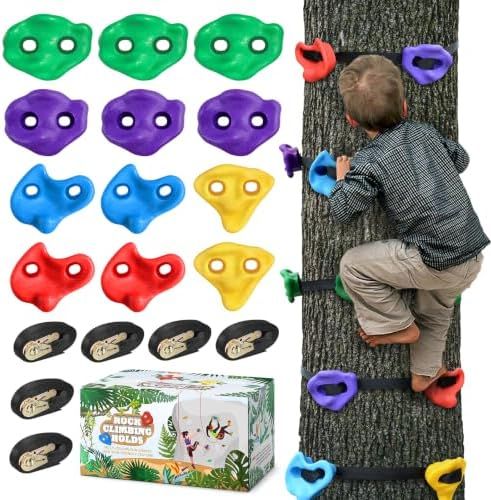
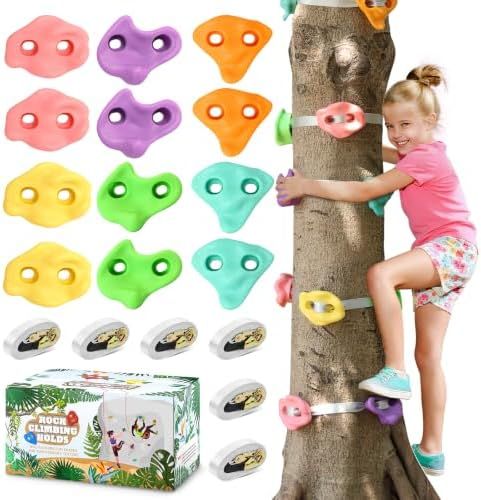
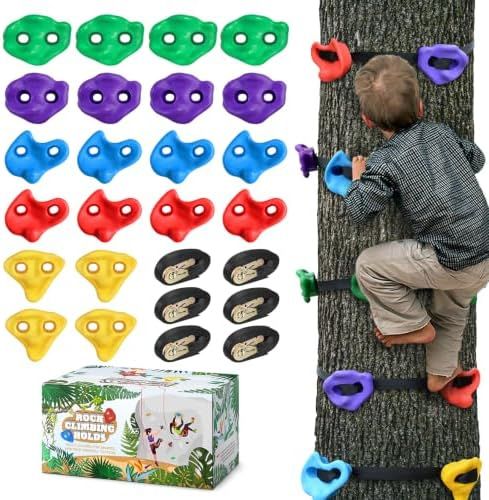
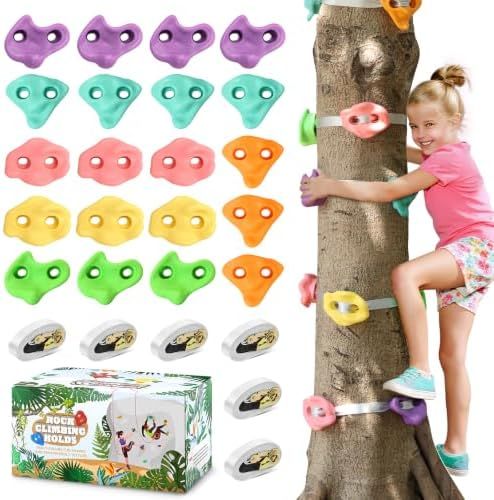
A strap-on kit carries each hold on a ratchet strap that wraps the trunk. Tension spreads the load across a wide band of bark rather than concentrating it on a screw, and nothing penetrates the tree at all. For a rented yard or a tree you care about, this is the only acceptable answer.
It is also the faster build. A trunk route goes up in an hour with no drill, no dust and no hardware to drop in the grass, and it comes down just as quickly when the season ends or you move.
The cost is maintenance. Straps settle in the first week, loosen after rain and need a ratchet pull every few weeks through the climbing season. Wraps should also shift a few inches each year so the tree never grows against a fixed band.
Choosing between them
Surface decides it. Plywood, play set panel or fence structure means bolt-on. Living tree means strap-on. There is no adapter that makes a bolt-on hold safe on bark, and putting a strap kit on a flat wall wastes most of what you paid for.
If you have both a wall and a tree, the ordinary result is two kits — and that is fine, because the climbing they produce is different. A panel route is precise and repeatable; a trunk route moves under the climber and teaches a different kind of balance and grip strength.
Load ratings are comparable across the two systems, around 230 lb per hold, so the decision really is about the surface and the upkeep you want to sign up for.
Care for both
Bolt-on: check torque at the start of each season, look for any hold that has begun to spin, and keep the panel face dry where you can. A spinning grip means the weld nut is pulling and wants attention before the next climb.
Strap-on: re-tension on a schedule, inspect the bark under each band, and replace any strap with a frayed edge rather than retiring it to a lower hold.
Both: wash the grips with warm water and a brush when the texture stops feeling grippy. Resin holds polish up with hand oil and dust, and clean plastic is noticeably safer.
Shelves this draws on
- Rock Wall Climbing Holds — 20 sets
- Tree Climbing Holds and Ninja Kits — 15 sets
- Balance Stones, Boards and Handles — 12 sets
- Ropes, Nets and Swings — 8 sets
Other route notes
Sets mentioned here
Questions about mounting kids climbing holds
Can I screw a bolt-on hold straight into a tree?
No. Lag screws into living wood injure the tree and loosen as it moves. Use a strap kit on a trunk, every time.
Do strap-on holds work on a flat wall?
Not usefully — there is nothing for the strap to wrap. Buy the bolt-on version for plywood.
Which is safer for small children?
Neither, inherently. Safety comes from the build: correct hardware or correct tension, matting underneath, and an adult watching the first climbs.