
What a rock climbing wall actually does for a kid
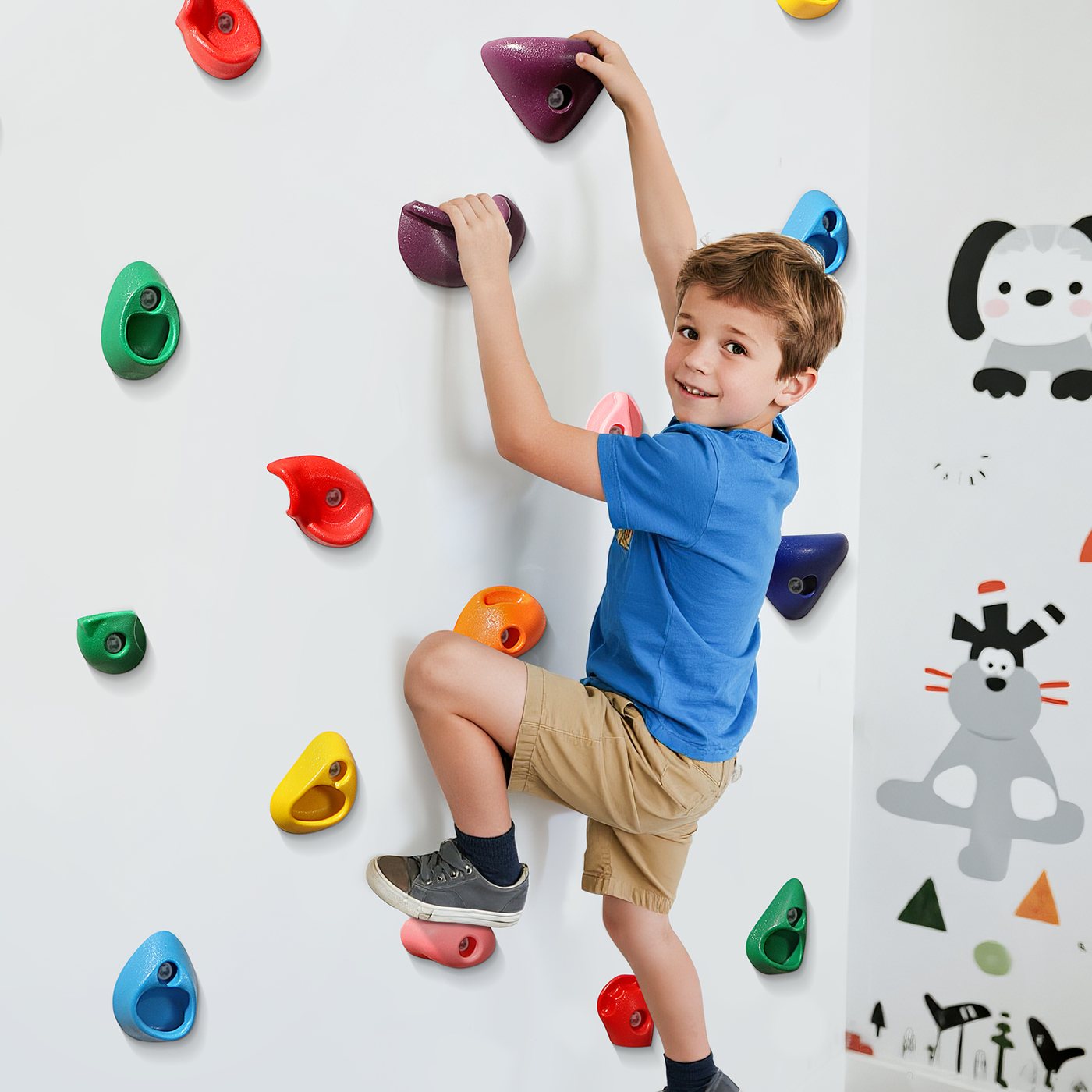
Climbing is not just exercise with a wall attached. A panel of rock climbing holds builds grip strength and balance in a kid, and it asks a child to plan three moves ahead, which is the part parents notice last.
The short answers
- How do climbing walls benefit child development? They build grip and whole-body strength, sharpen balance and footwork, and give children practice at planning moves and judging risk with real feedback.
- What age can a child start? Around two on large playground grips a hand's width apart, over matting, with an adult within reach. Stepping stones come even earlier.
- Is a playroom wall enough exercise? It is not a substitute for running around, but it is the most-used piece of equipment in most rooms it goes into, which counts for more than any rating.
Strength that comes from hanging
Pulling a body weight up a wall develops the shoulder girdle, the forearms and the hands in a way no other play equipment does. Grip strength in particular is built only by gripping, and it underwrites handwriting, climbing frames, bike brakes and everything else a child's hands are asked to do.
A wall is also whole-body work. Feet push, core holds the body close to the panel, arms pull — children who climb regularly stand differently after a season of it.
Because the effort is self-limiting, a child stops when tired and climbs again twenty minutes later. That pattern is why an active child will put more hours into a wall than into any structured session.
Balance and body awareness
Balance comes before climbing, which is why stepping stones and boards matter as much as the holds. A toddler crossing six stones learns where their weight is; a six year old stacking the stones into towers learns what happens when it moves.
On the wall, the same awareness turns into footwork. A child who trusts their feet climbs with straight arms and lasts; a child who does not hauls with the arms and is down in two minutes. The route you set, dense or sparse, pushes them one way or the other.
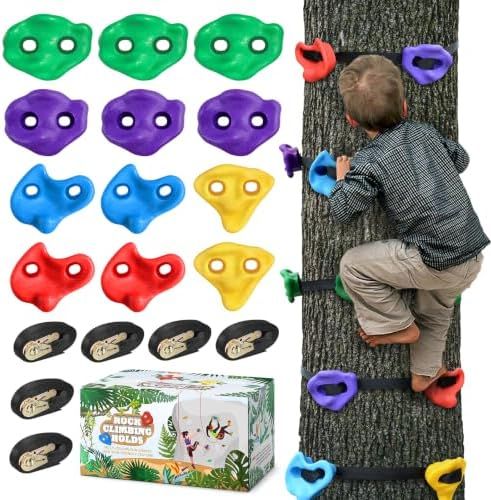
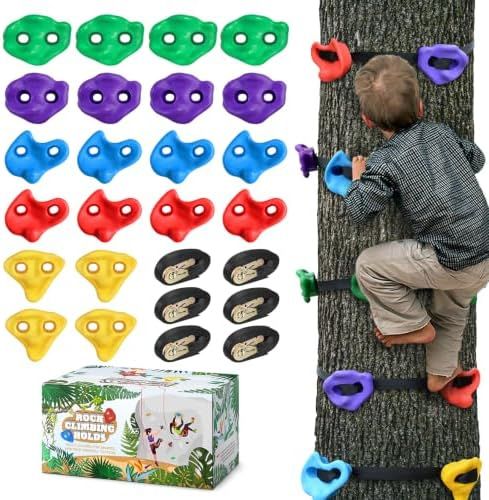
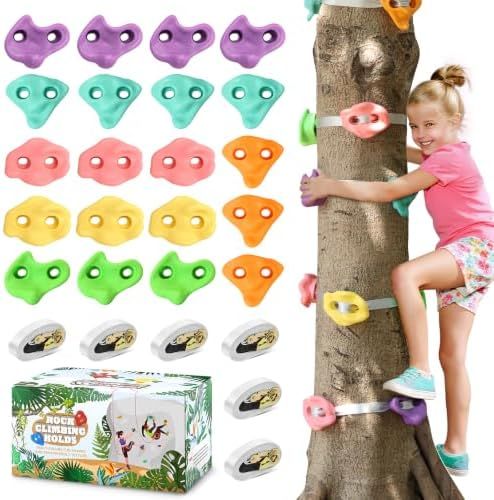
Trunk routes are the best balance tool in the catalog precisely because the surface is round and the straps give a little. Nothing on a flat panel teaches that.
Planning, risk and persistence
A climbing route is a problem with a visible solution, and children read it the way they read a maze. Which color goes to the top? Where does the hand go if the foot is there? That is planning, done physically, with immediate feedback.
Risk reading is the quieter benefit. On a low wall over matting, a child learns the difference between a move that will work and one that will not, and learns to come down rather than commit. Children who never get that practice make the same judgments later in places with worse consequences.
Then there is persistence. A route a child cannot do today is a route they can do in three weeks, and the wall remembers nothing and judges no one. Families report that as the real change: a child who keeps trying.
Setting routes that keep working
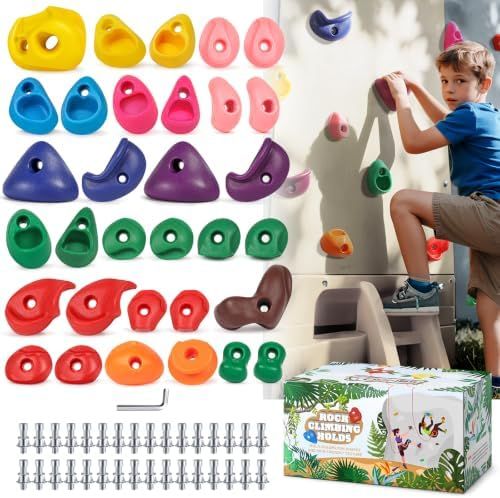
Design for growth. A wall built for a four year old is boring at seven unless it changes, which is an argument for drilling many more weld nuts than you fill and keeping a box of spare holds.
Keep one easy route permanently. Every climber, at every age, wants a warm-up and something to retreat to on a bad day. A single color from floor to top does that job.
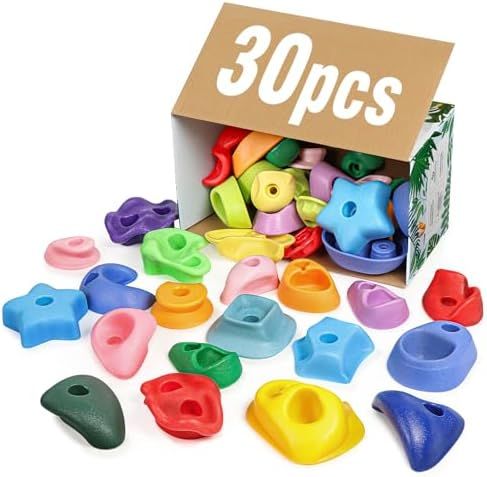
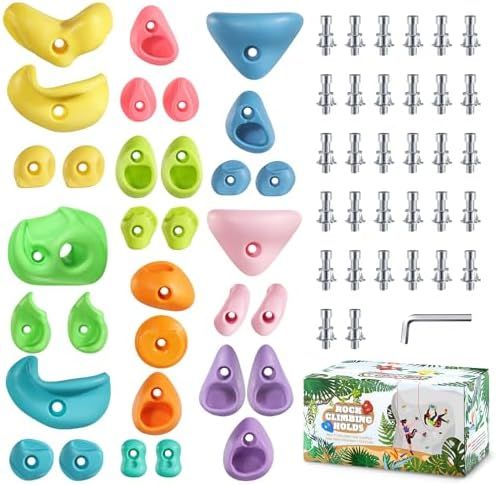
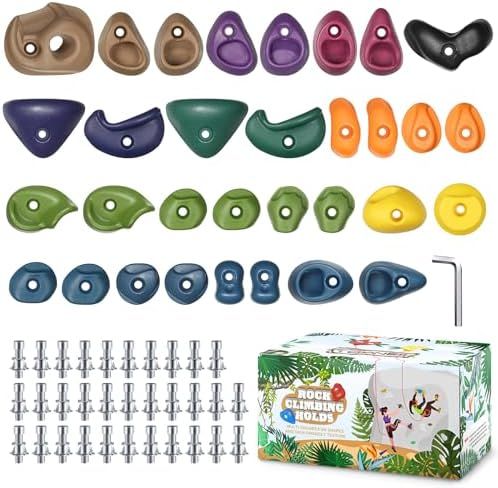
Introduce new shapes rather than new quantity. A multi-size set, with pinch pads and smaller crimps among the jugs, makes an old wall feel new and adds a level of challenge that extra grips cannot buy.
Shelves this draws on
- Rock Wall Climbing Holds — 20 sets
- Tree Climbing Holds and Ninja Kits — 15 sets
- Balance Stones, Boards and Handles — 12 sets
- Ropes, Nets and Swings — 8 sets
Other route notes
Sets mentioned here

Questions about kids and rock climbing
How do climbing walls benefit child development?
They build grip and whole-body strength, sharpen balance and footwork, and give children practice at planning moves and judging risk with real feedback.
What age can a child start?
Around two on large playground grips a hand's width apart, over matting, with an adult within reach. Stepping stones come even earlier.
Is a playroom wall enough exercise?
It is not a substitute for running around, but it is the most-used piece of equipment in most rooms it goes into, which counts for more than any rating.